


Cybersecurity Best Practices: Protecting Your Business in a Digital World
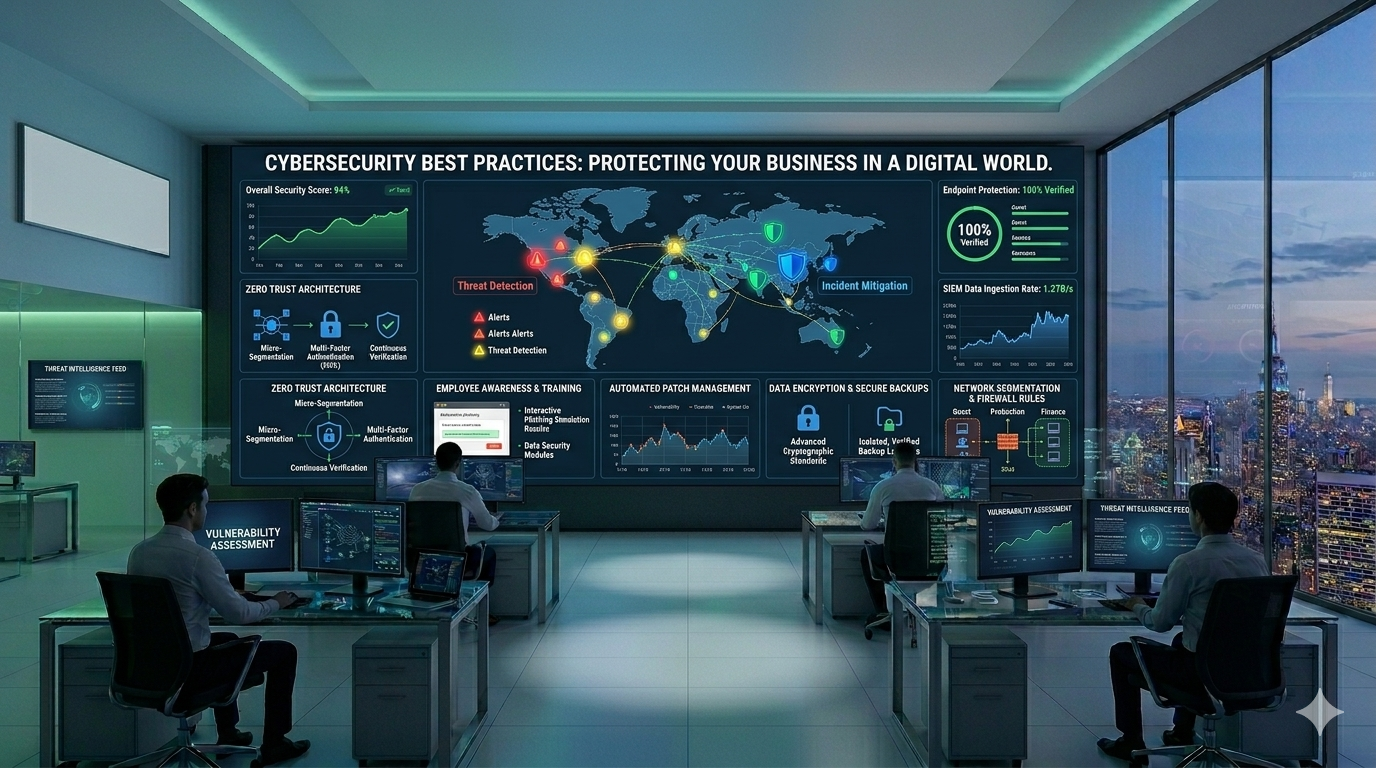
In today's interconnected business environment, cybersecurity is no longer just an IT concern—it is a critical business priority. As organizations increasingly rely on digital technologies, cloud services, remote work environments, and connected devices, they become more vulnerable to cyber threats such as ransomware, phishing attacks, data breaches, and insider threats.
A single cybersecurity incident can result in financial losses, operational disruptions, reputational damage, and regulatory penalties. To stay protected, businesses must adopt proactive cybersecurity measures that safeguard their systems, data, employees, and customers.
Why Cybersecurity Matters
Cybercriminals continuously evolve their tactics, targeting organizations of all sizes. Contrary to popular belief, small and medium-sized businesses are often targeted because they may have fewer security controls in place than larger enterprises.
Strong cybersecurity practices help organizations:
- Protect sensitive business and customer data
- Maintain operational continuity
- Prevent financial losses
- Meet regulatory and compliance requirements
- Preserve customer trust and confidence
- Strengthen organizational resilience
Cybersecurity is not a one-time project but an ongoing process that requires continuous improvement and vigilance.
Essential Cybersecurity Best Practices
1. Implement Strong Password Policies
Weak passwords remain one of the most common causes of security breaches.
Businesses should:
- Require complex passwords
- Enforce regular password updates
- Prohibit password sharing
- Use password managers for secure credential storage
- Implement account lockout policies
Strong authentication practices provide the first line of defense against unauthorized access.
2. Enable Multi-Factor Authentication (MFA)
Multi-Factor Authentication adds an extra layer of security by requiring users to verify their identity using multiple methods.
Even if a password is compromised, MFA significantly reduces the likelihood of unauthorized access to business systems and applications.
3. Keep Systems and Software Updated
Outdated software often contains known vulnerabilities that cybercriminals actively exploit.
Organizations should:
- Regularly update operating systems
- Patch applications and software
- Upgrade network devices and firmware
- Remove unsupported systems
Timely patch management helps eliminate security gaps before they can be exploited.
4. Train Employees on Cybersecurity Awareness
Human error remains one of the leading causes of cybersecurity incidents.
Employees should be trained to:
- Identify phishing emails
- Recognize social engineering attacks
- Handle sensitive information securely
- Report suspicious activities
- Follow company security policies
A well-informed workforce serves as a powerful security asset.
5. Backup Critical Data Regularly
Data backups are essential for business continuity and disaster recovery.
Best practices include:
- Automated backup schedules
- Offsite or cloud-based backups
- Regular backup testing
- Multiple backup copies
Reliable backups can significantly reduce downtime and data loss following cyber incidents such as ransomware attacks.
6. Secure Your Network Infrastructure
Organizations should strengthen their network security through:
- Firewalls
- Network segmentation
- Secure Wi-Fi configurations
- Intrusion Detection Systems (IDS)
- Intrusion Prevention Systems (IPS)
A secure network environment helps prevent unauthorized access and limits the spread of cyber threats.
7. Protect Endpoints and Devices
Laptops, desktops, mobile devices, and servers represent common attack targets.
Businesses should deploy:
- Endpoint Detection and Response (EDR) solutions
- Antivirus and anti-malware tools
- Device encryption
- Mobile device management solutions
Comprehensive endpoint protection helps identify and stop threats before they cause damage.
8. Control Access to Sensitive Information
Not every employee requires access to every system or dataset.
Organizations should apply the Principle of Least Privilege (PoLP), ensuring users only have access to the resources necessary for their roles.
This minimizes the potential impact of compromised accounts and insider threats.
9. Develop an Incident Response Plan
No organization is completely immune to cyber threats.
An incident response plan should define:
- Roles and responsibilities
- Communication procedures
- Investigation processes
- Recovery strategies
- Reporting requirements
Having a clear response strategy helps organizations react quickly and minimize damage during a security incident.
10. Conduct Regular Security Assessments
Cybersecurity should be continuously evaluated.
Organizations should perform:
- Vulnerability assessments
- Penetration testing
- Security audits
- Risk assessments
- Compliance reviews
Regular assessments help identify weaknesses before attackers can exploit them.
Emerging Threats Businesses Should Monitor
As technology evolves, businesses must remain vigilant against emerging threats, including:
- Ransomware attacks
- AI-powered cyber threats
- Business Email Compromise (BEC)
- Supply chain attacks
- Cloud security risks
- Insider threats
- Internet of Things (IoT) vulnerabilities
Staying informed about evolving risks enables organizations to adapt their security strategies accordingly.
Building a Cybersecurity Culture
Effective cybersecurity extends beyond technology. It requires leadership commitment, employee engagement, and organization-wide accountability.
A strong cybersecurity culture encourages:
- Security awareness at all levels
- Responsible digital behavior
- Continuous learning
- Proactive risk management
- Shared responsibility for protecting organizational assets
When cybersecurity becomes part of everyday business operations, organizations are better positioned to defend against modern threats.
How STARVAS Systems Can Help
At STARVAS Systems, we understand that cybersecurity is fundamental to business success. Through our STARVAS Secure solutions, we help organizations strengthen their security posture by implementing best practices, risk management frameworks, security awareness programs, and modern cybersecurity technologies.
Our team works with businesses to identify vulnerabilities, enhance resilience, protect critical assets, and build secure digital environments that support sustainable growth.
Conclusion
Cybersecurity is no longer optional in today's digital economy. Organizations that proactively implement cybersecurity best practices are better equipped to prevent attacks, protect sensitive information, maintain customer trust, and ensure business continuity.
By investing in people, processes, and technology, businesses can create a strong foundation for long-term security and resilience in an increasingly complex threat landscape.
Cybersecurity is not simply about preventing attacks—it is about enabling businesses to operate confidently, securely, and successfully in the digital age.