


Blockchain Beyond Cryptocurrency: Transforming Industries Through Innovation
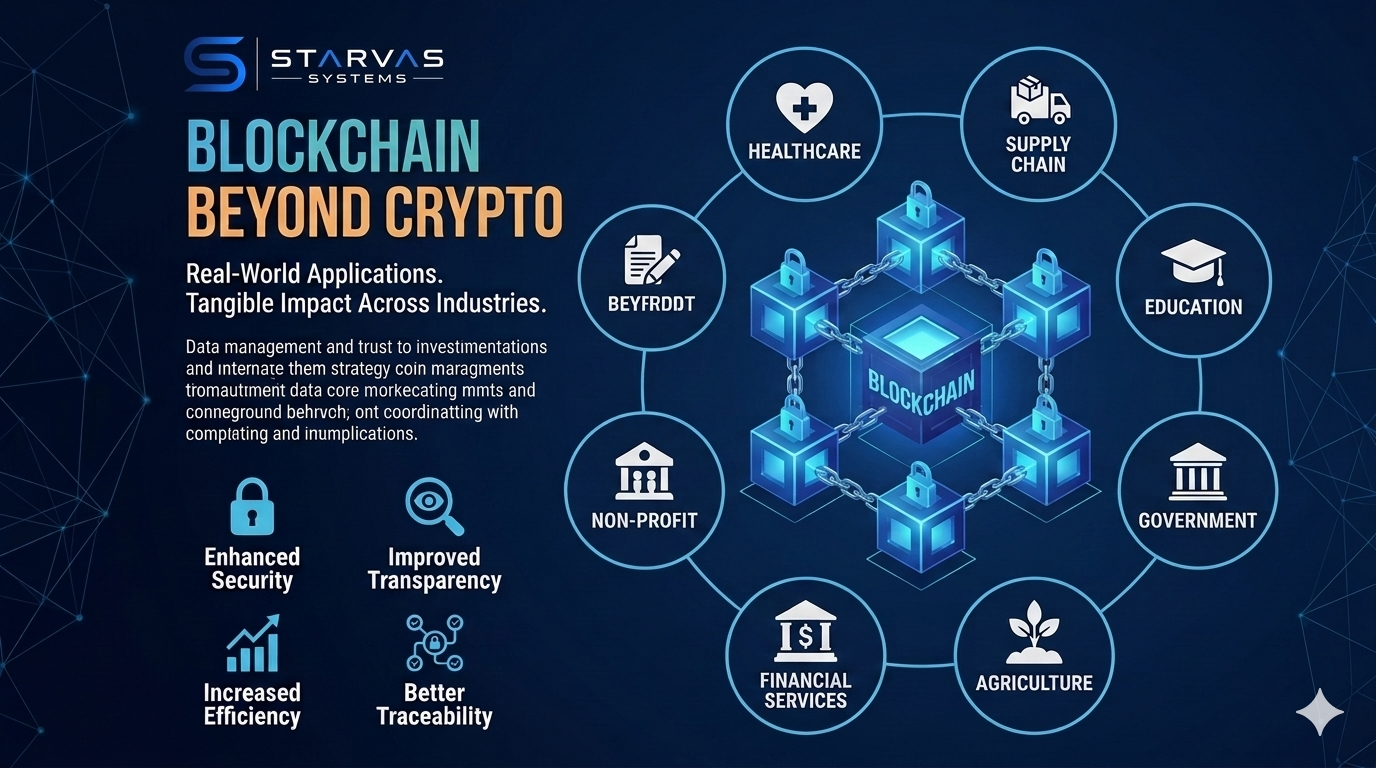
For many people, blockchain technology is synonymous with cryptocurrencies such as Bitcoin and Ethereum. However, blockchain's true potential extends far beyond digital currencies. Today, organizations across multiple industries are leveraging blockchain to improve transparency, security, efficiency, and trust in their operations.
As businesses continue their digital transformation journeys, blockchain is emerging as a powerful technology capable of addressing some of the most persistent challenges in data management, transaction verification, and process automation.
What is Blockchain?
Blockchain is a decentralized digital ledger that records transactions across multiple computers in a secure and transparent manner. Each transaction is stored in a "block" and linked to previous blocks, creating an immutable chain of records that cannot be altered without consensus from the network.
Unlike traditional databases controlled by a single entity, blockchain distributes information across multiple participants, reducing the risk of fraud, unauthorized modifications, and system failures.
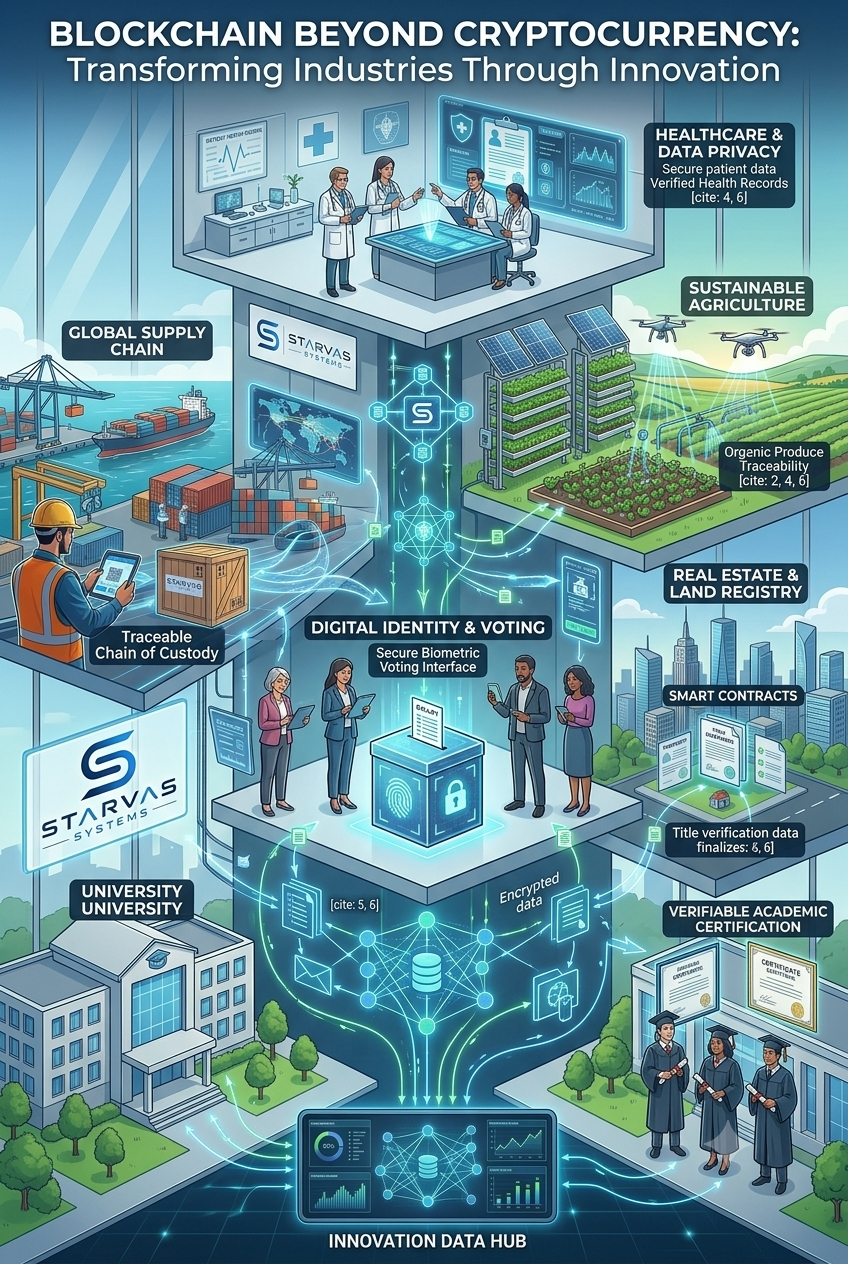
Blockchain Applications Across Industries
Healthcare
Healthcare providers face significant challenges in managing patient records, ensuring data privacy, and sharing information across institutions.
Blockchain enables:
- Secure patient data management
- Improved interoperability between healthcare systems
- Enhanced drug traceability
- Protection against medical record fraud
By creating a secure and auditable record of patient information, healthcare organizations can improve service delivery while maintaining privacy and compliance.
Supply Chain Management
Modern supply chains involve multiple stakeholders, making transparency and accountability difficult.
Blockchain helps organizations:
- Track products from origin to destination
- Verify product authenticity
- Reduce counterfeit goods
- Improve inventory management
- Enhance supplier accountability
Companies can provide customers with complete visibility into product journeys, building trust and strengthening brand reputation.
Education and Certification
Educational institutions increasingly use blockchain to issue and verify academic credentials.
Benefits include:
- Tamper-proof certificates and diplomas
- Faster credential verification
- Reduced document fraud
- Secure lifelong learning records
Employers can instantly verify qualifications, while learners maintain permanent ownership of their achievements.
Government and Public Services
Governments worldwide are exploring blockchain to improve transparency and citizen services.
Applications include:
- Digital identity management
- Land registry systems
- Public procurement transparency
- Secure voting systems
- Tax administration
Blockchain can help reduce corruption, streamline public services, and increase citizen trust.
Financial Services
Beyond cryptocurrencies, blockchain is revolutionizing traditional finance by enabling:
- Faster cross-border payments
- Secure digital banking
- Fraud prevention
- Automated compliance
- Smart contracts
Financial institutions can reduce transaction costs while improving security and customer experience.
Agriculture
Farmers and agricultural organizations benefit from blockchain through:
- Farm-to-market traceability
- Verification of organic products
- Supply chain transparency
- Agricultural financing
- Smart insurance systems
Consumers gain confidence in product authenticity while farmers receive fair compensation and improved market access.
Humanitarian and Non-Profit Organizations
For NGOs and humanitarian agencies, blockchain offers opportunities to improve accountability and transparency in aid distribution.
Potential applications include:
- Tracking donor funds
- Verifying aid delivery
- Managing beneficiary identities
- Improving procurement processes
- Enhancing reporting and compliance
This helps organizations demonstrate impact while ensuring resources reach intended beneficiaries.
The Role of Smart Contracts
One of blockchain's most powerful features is the smart contract—self-executing digital agreements that automatically perform actions when predefined conditions are met.
Examples include:
- Automatic payment releases upon project completion
- Insurance claim processing
- Supplier payment automation
- Compliance verification
Smart contracts reduce manual intervention, minimize errors, and accelerate business processes.
Challenges to Consider
Despite its advantages, blockchain adoption comes with challenges:
- Regulatory uncertainty
- Integration with existing systems
- Scalability concerns
- Initial implementation costs
- Skills and knowledge gaps
Organizations must carefully assess their business requirements and develop a strategic implementation roadmap.
Key Benefits of Blockchain Technology
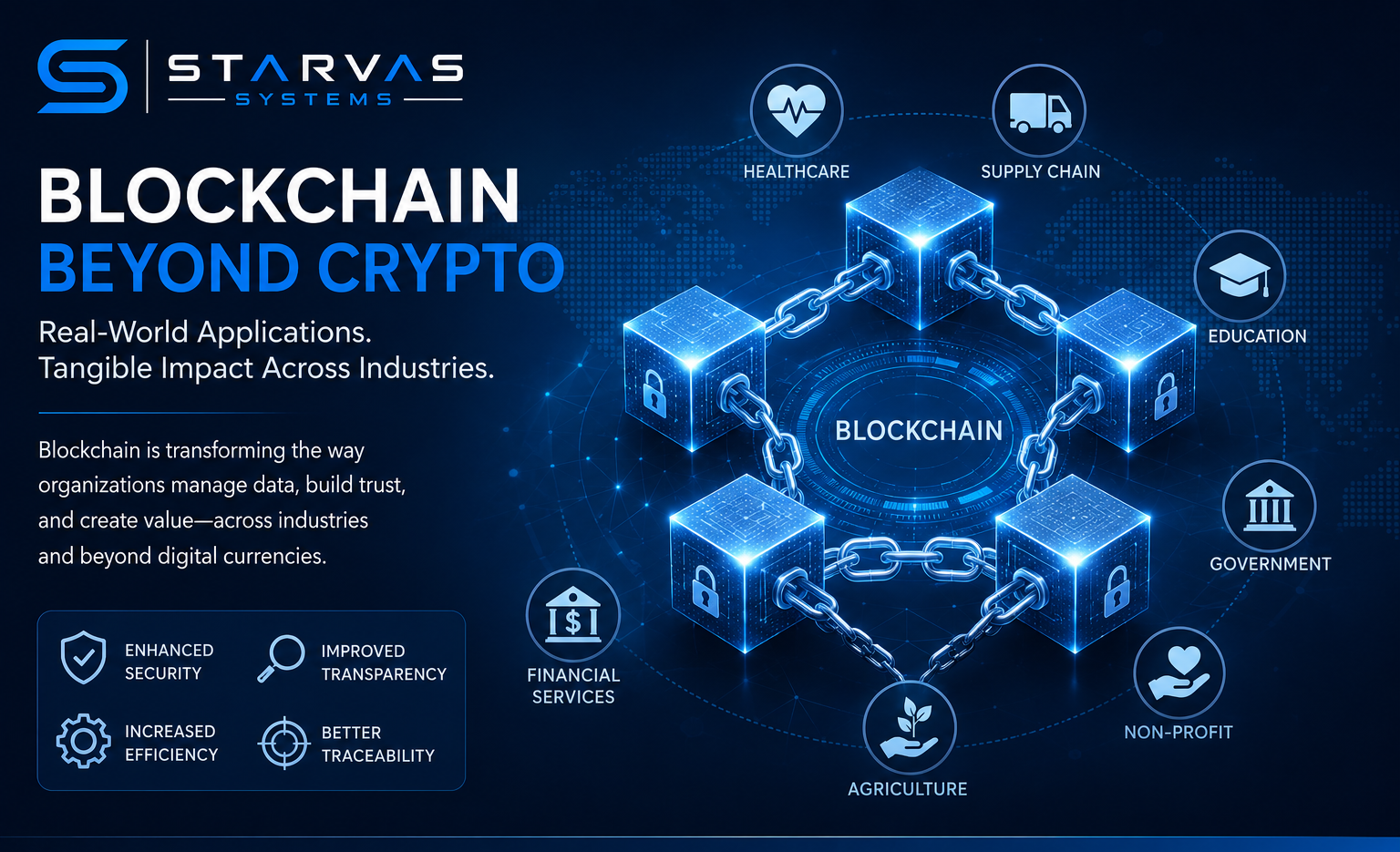
- Enhanced Security - Blockchain uses advanced cryptographic techniques to secure data, making it highly resistant to hacking, tampering, and unauthorized access.
- Improved Transparency - All authorized participants can view transaction histories, promoting accountability and reducing disputes.
- Increased Efficiency - By eliminating intermediaries and automating processes through smart contracts, blockchain reduces operational costs and accelerates transactions.
- Better Traceability - Organizations can track assets, products, and information throughout their lifecycle, improving visibility and compliance.
How STARVAS Systems Can Help
At STARVAS Systems, we help organizations explore, design, and implement innovative digital solutions that drive efficiency, security, and sustainable growth. Our expertise in digital transformation, data management, cybersecurity, AI, and enterprise systems positions us to guide businesses in understanding and leveraging emerging technologies such as blockchain.
Whether you're looking to improve supply chain transparency, secure critical data, automate business processes, or explore decentralized solutions, STARVAS Systems can help you identify practical blockchain applications aligned with your organizational goals.
Looking Ahead
Blockchain is no longer just the foundation of cryptocurrencies—it is becoming a transformative technology across healthcare, education, agriculture, finance, government, and humanitarian sectors. As organizations seek more secure, transparent, and efficient ways of operating, blockchain will continue to play a critical role in shaping the future of digital innovation.
The question is no longer whether blockchain can create value beyond cryptocurrency, but how organizations can strategically adopt it to gain a competitive advantage in an increasingly digital world.