


The Digital Backbone: The Role of IT in Supporting Remote Technologies for STARVAS Systems
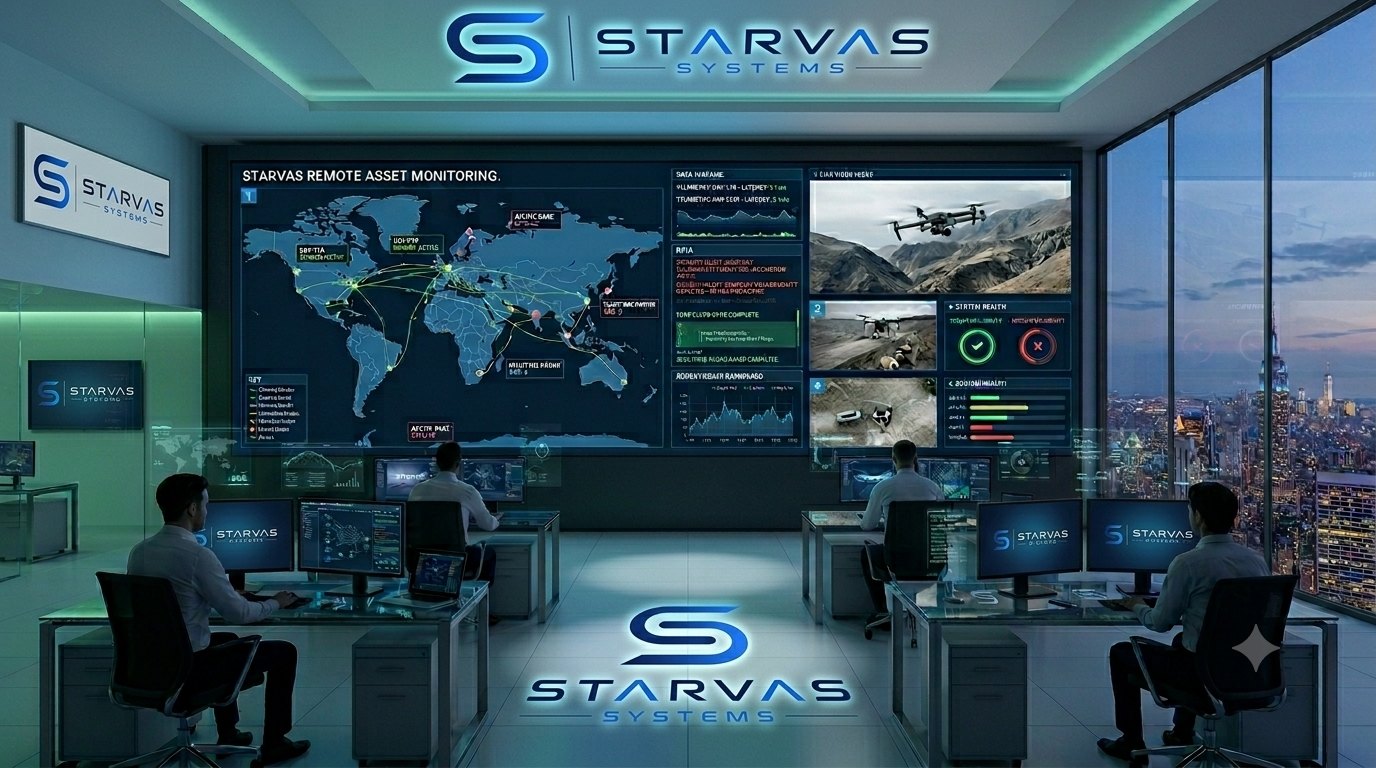
The landscape of modern operations—spanning mission-critical infrastructure, defense, complex logistics, and large-scale industrial ecosystems—increasingly relies on distributed architectures. Among these, STARVAS Systems represent the cutting edge of situational awareness and asset management.
Because STARVAS systems operate heavily in volatile, isolated, or geographically dispersed environments, their success hinges entirely on seamless integration with remote technologies. Behind these technologies sits the central nervous system of the enterprise: Information Technology (IT). Without a robust IT framework, the remote capabilities of STARVAS would crumble under data bottlenecks, latency spikes, and security vulnerabilities.
1. Establishing the Infrastructure: High-Availability & Low-Latency Networks
Remote edge devices—such as autonomous drones, ground sensors, and orbital tracking units—feed massive telemetry datasets back to central control systems. IT architecture acts as the highway for this data, necessitating specific structural implementations:
Edge Computing Integration: To mitigate data bottlenecks, IT infrastructure implements edge nodes directly within the field. Processing critical tracking algorithms locally reduces the need to constantly pipe terabytes of raw video and telemetry back to a centralized cloud.
Hybrid Cloud Frameworks: By leveraging hybrid environments, IT ensures that highly sensitive STARVAS metadata remains on-premise or within private, secure military/industrial clouds, while scalable analytical tasks utilize protected public cloud resources.
Dynamic Bandwidth Management: IT teams deploy Software-Defined Wide Area Networks (SD-WAN) and satellite-link optimizations (such as Starlink or specialized LEO constellations) to prioritize high-priority reconnaissance streams over secondary diagnostic data during active missions.
2. Fortifying the Perimeter: Advanced Cybersecurity Protocols
By design, remote technologies drastically expand an organization's attack surface. Every remote camera, autonomous sensor, or virtual asset endpoint represents a potential entry point for adversarial cyber operations. IT security is the primary shield protecting STARVAS frameworks through several core pillars:
Zero Trust Architecture (ZTA): Under a Zero Trust model, no remote asset is trusted inherently. Continuous authentication, micro-segmentation, and strict identity verification are enforced for every peripheral device attempting to communicate with the STARVAS core.
End-to-End Encryption: IT protocols manage the deployment of military-grade encryption standards (such as AES-256 or quantum-resistant cryptography) to secure data-in-transit across insecure, remote channels.
Automated Threat Detection: Leveraging AI-driven Security Information and Event Management (SIEM) systems, IT can monitor remote connections in real-time, instantly isolating any compromised edge asset before a breach can lateralize across the broader system.
3. Sustaining Operations: Remote Management and Monitoring (RMM)
Maintaining physical access to hardware deployed in dense forests, maritime zones, or hostile territories is often impossible. IT bridges this gap through robust software virtualization and remote maintenance systems.
Virtualization allows an encapsulating software layer to mimic physical hardware, decoupling the software stack from the physical state of the machine. This foundational approach yields significant operational advantages:
| IT Operational Capability | Functional Role in STARVAS |
| Over-The-Air (OTA) Patches | Pushing algorithmic updates and firmware hotfixes seamlessly to remote autonomous units without taking them offline. |
| Digital Twin Simulation | Creating software-replicated virtual versions of remote tracking hardware to test updates and anticipate mechanical or digital failure points. |
| Continuous Health Monitoring | Utilizing telemetry pipelines to track power consumption, thermal levels, and processor strain on distant reconnaissance systems. |
4. Powering Intelligence: Data Harmonization and AI Pipelines
The ultimate objective of a STARVAS system is to deliver actionable, real-time intelligence. Remote sensors generate highly fragmented data types—ranging from radar signatures and thermal imagery to geospatial coordinates and acoustic logs.
IT departments build the complex Enterprise Application Integration (EAI) and data warehousing pipelines that ingest these disparate streams. Through automated extraction, transformation, and loading (ETL) processes, IT harmonizes the incoming data, feeding it directly into AI and machine learning models. This integration enables the autonomous reconnaissance features of the system to identify targets, forecast asset degradation, and dynamically adjust tracking pathways with minimal human intervention.
Conclusion
Remote technologies give STARVAS systems their reach, autonomy, and eyes, but Information Technology provides the brains and the backbone. By engineering resilient networks, enforcing unyielding cybersecurity, enabling remote device virtualization, and streamlining data fusion, IT shifts STARVAS from a theoretical concept into a highly scalable operational reality. As the demand for remote, unmanned asset surveillance continues to escalate, the co-evolution of IT infrastructure and autonomous edge technologies will define the next generation of situational dominance.